79+ Key Web Design Statistics For SMB & B2B (2026 updated)
Web design did not always decide who wins business.
In the late 1990s, a basic website was enough just to be online. By 2018, mobile traffic passed desktop, and design became about speed, trust, and clarity. Today, 75% of users judge a business’s credibility by its website design, and 38% leave if a site looks outdated or hard to use.
For SMB and B2B companies, the website now matters as much as a sales call. Compared to early web days, expectations are far higher. Now, AI tools, speed rules, and accessibility standards are changing web design again, making these statistics more important than ever.
With that in mind, we’ll cover some essential web design statistics in 2026 that show the power of web design for B2B and small businesses.
Web Design Statistics: Key Numbers
- There are 1.14 billion websites in the world, 17% of which are active and 83% of which are inactive.
- 94% of first impressions of a website are based on its design.
- A great UX design can boost conversion rates by up to 400%.
- 75% of users judge a business’s credibility based on its website’s design.
- The return on investment (ROI) for UX design can reach 9,900%.
- 89% of consumers shop with a competitor after a poor user experience.
- 74% of users are more likely to come back to websites that work well on mobile devices.
- Up to $2.6 billion in sales are lost every year because websites take too long to load.
- 47% of users expect a web page to load in two seconds.
Sources: (WPBeginner, PR Newswire, UX Design, Kinesis, Forrester, Oracle, Think with Google, Forbes.)
02.
The Importance of Responsive Web Design Statistics
Web design plays a key role in how people interact with a site across different screens. A layout that adapts well helps content stay clear, usable, and consistent. We often see sites lose trust and engagement when the experience feels broken on certain devices. Responsive design supports smoother visits and stronger outcomes.
- An estimated 90% of websites, or 1.71 billion, have responsive design.
- 62% of businesses report increased sales as a result of responsive websites.
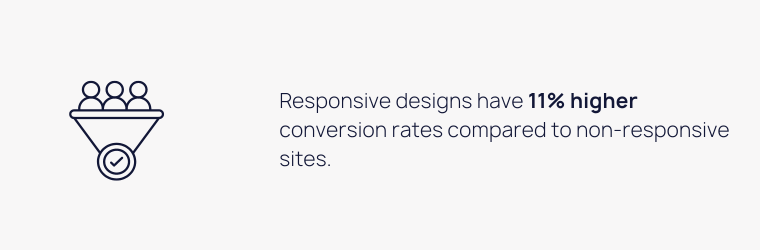
- Responsive designs have 11% higher conversion rates compared to non-responsive sites.
- Responsive design results in a 15% increase in unique clicks among mobile users.
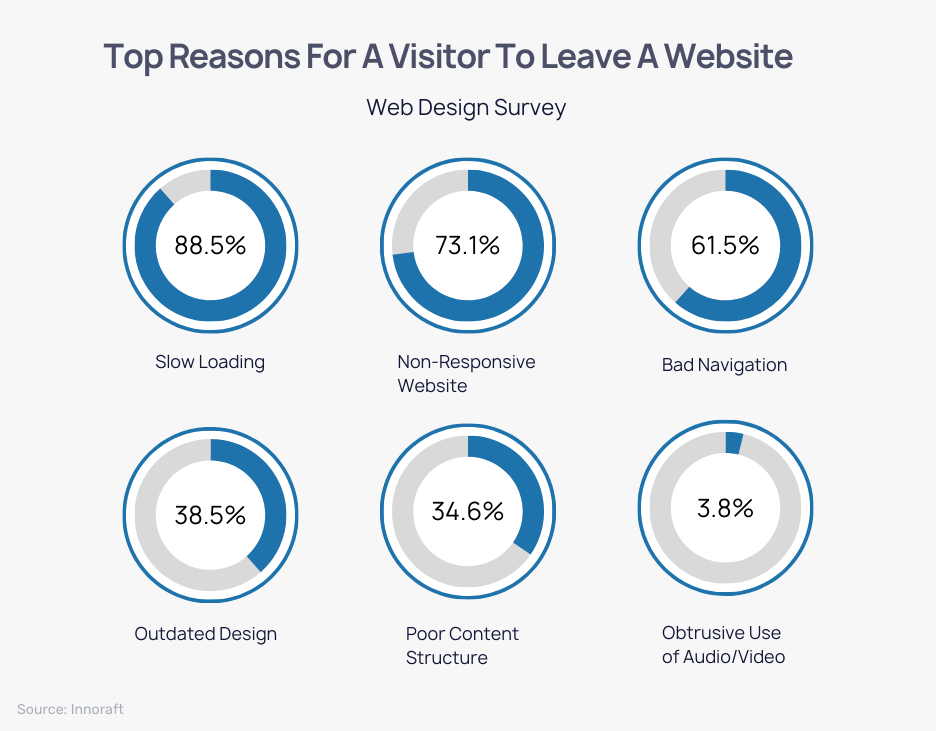
- 73.1% of web designers say non-responsive design is the main reason visitors leave.
- Around 67% of users prefer responsive websites when purchasing products or services online via smartphones.
- 68% of mobile users are more likely to stay engaged on mobile-responsive websites.
Sources: (TheNextWeb, Insivia, Mailchimp, Linkedin, Elephant In The Boardroom)
03.
Mobile Friendly Web Design Statistics
Mobile browsing now shapes how people view and trust websites. Poor mobile design can push visitors away, while smooth experiences help build loyalty and confidence. We often see mobile friendliness tied closely to engagement, return visits, and overall site success. Designing with mobile in mind has become a core part of modern web presence.
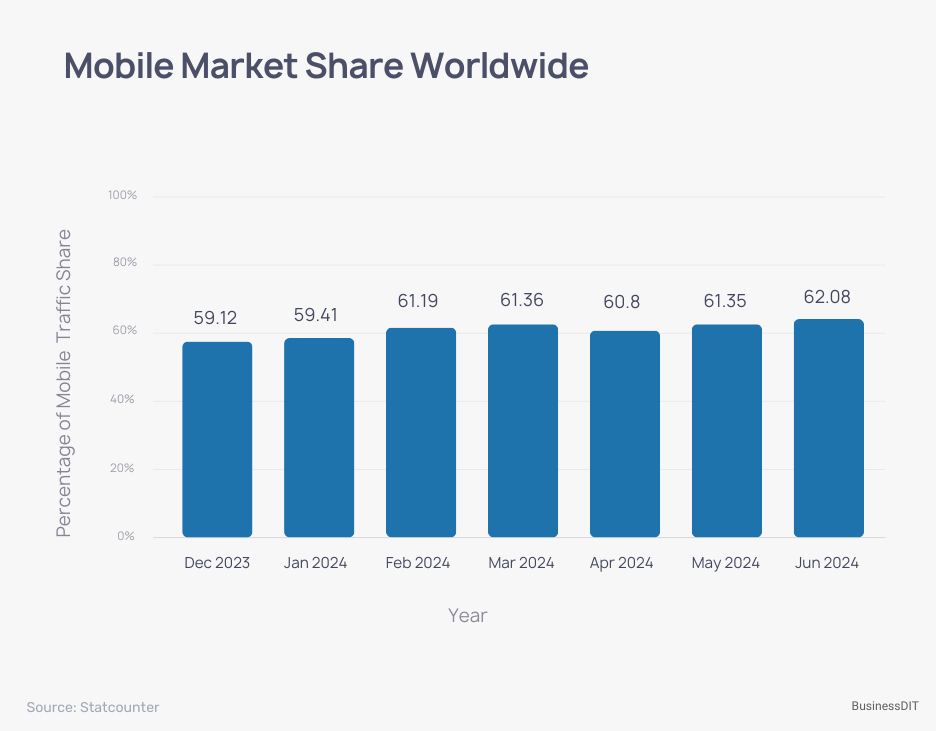
- Mobile devices are responsible for 61.35% of all website traffic worldwide.
- 75% of users are more likely to return to websites that are mobile-friendly.
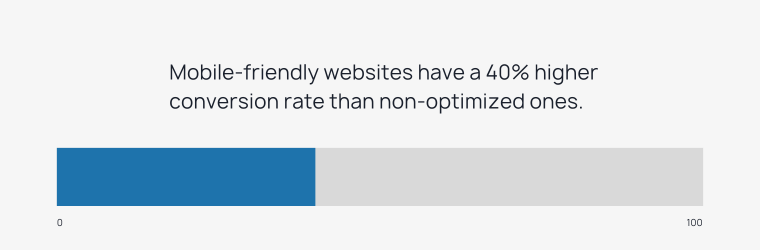
- Mobile-friendly websites have a 40% higher conversion rate than non-optimized ones.
- 72% of people prefer mobile-friendly websites.
- 57% of internet users will not recommend a business with a bad mobile website.
Sources: (Statcounter, Think With Google, Forbes)
04.
UX Design Statistics
User experience shapes how people feel, decide, and trust a digital product. Clear design reduces effort and builds confidence over time. When pages feel slow or confusing, frustration grows and loyalty fades. Across many platforms, we see design choices influence behavior more than messages alone. Strong UX supports smoother journeys, steadier trust, and healthier results.
- 97% of websites fail at user experience.
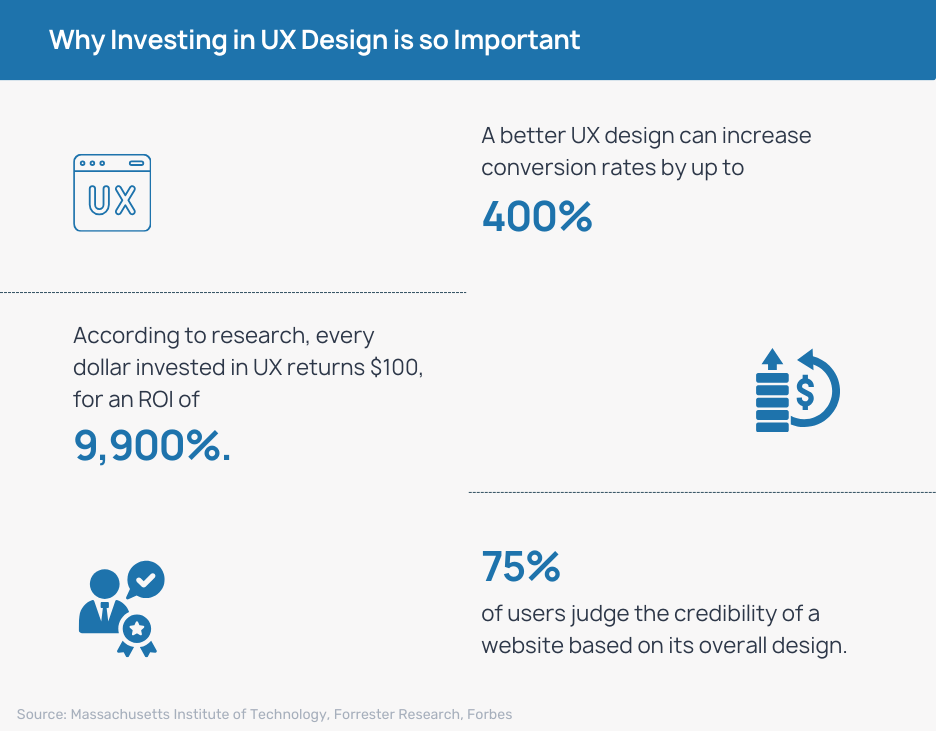
- A better UX design can increase conversion rates by up to 400%.

- According to research, every dollar invested in UX returns $100, for an ROI of 9,900%.
- 88% of online consumers are less likely to return to a site after a negative experience.
- 94% of people do not trust old or out-of-date websites.
70% of customers abandon purchases due to poor UX.
- A one-second delay in page response can reduce conversions by 7%.
- One bad user experience would cause 30% of customers to leave, according to a study.
Sources: (Massachusetts Institute of Technology, Forrester Research, Forbes, Kinesis, Toptal, Coastal Web Marketing, Red Signal, Web FX, Kiss Metrics, TrueList.)
05.
Impact of Poor UX on User Behavior and Trust
When a website feels hard to use, trust can break down fast. Confusing design, slow responses, and outdated pages create frustration and doubt. These problems shape how people judge a brand and decide whether to stay. We see user confidence fade when the experience feels unreliable or careless.
- 97% of websites fail at user experience.
- 88% of online consumers are less likely to return to a site after a negative experience.
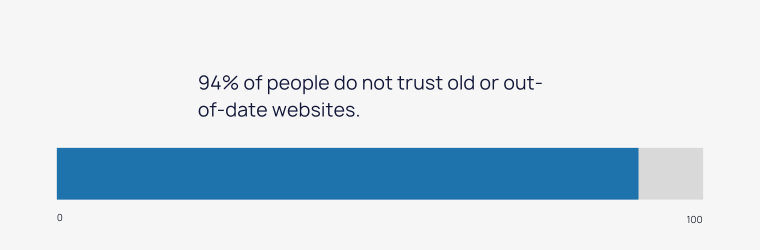
- 94% of people do not trust old or out-of-date websites.
- 70% of customers abandon purchases due to poor UX.
- A one-second delay in page response can reduce conversions by 7%.
- One bad user experience would cause 30% of customers to leave, according to a study.